Épanvie

DÎNER EN VILLE The French Art of the Intimate Dinner Party — Or, How to Host Eight People for Dinner Without Losing Your Mind, Your Marriage, or Your Mise en Place
DÎNER EN VILLE The French Art of the Intimate Dinner Party — Or, How to Host Eight People for Dinner Without Losing Your Mind, Your Marriage, or Your Mise en Place Dîner en ville — the French art of the intimate dinner party — has nothing to do with perfection and everything to do with pleasure. Épanvie's guide to hosting like a Parisian: table setting, wine, atmosphere, conversation, and the one thing French hosts never do.
An Épanvie Luxury Pillar Guide
17 min read
Here is the dinner party you have been hosting:
You invited people six weeks ago, when that felt like a comfortable distance in the future. Then the date arrived, and with it: a panicked sprint through three grocery stores, seventeen browser tabs of competing recipes, a tablecloth that needed ironing twenty minutes before guests arrived, a starter that was somehow both overdone and underprepared simultaneously, and the dawning realization at approximately 7:42pm — as you stood in your kitchen wearing oven mitts and a slightly unhinged expression — that you had not actually sat down once since 2pm.
Your guests had a wonderful time. You have no memory of it.
This is not hosting. This is an endurance sport with appetizers.
The French do something entirely different. They call it dîner en ville — literally 'dining in the city,' which historically referred to the elegant Parisian tradition of hosting intimate dinners at home as opposed to restaurants. And if you have ever sat at a French table and wondered why the whole evening felt effortless — why the host seemed genuinely delighted to be there, why the food was simple but memorable, why the conversation went somewhere interesting — the answer is not talent. It is philosophy.
The French host does not try to impress. They try to please. And that single distinction changes everything. And often, you achieve both.
This is your Épanvie guide to mastering the dîner en ville — the intimate dinner party as Luxury Pillar, as FlowCuration practice, and as one of the most generous, most JuviVelle-rich things you can do with a Saturday evening and six people you like.
The Épanvie Dinner Table: What Changes Everything
We look at a dinner party not as a performance, but a gift. And what a wonderful gift!
This sounds simple. It is, in fact, a complete reorientation of how most of us approach hosting. Many people host dinner parties filled with deep relationship and anxiety with impression — with the table that photographs well, the menu that signals culinary ambition, the evening that can be described admiringly afterward. The host is also, somewhere underneath all of this, auditioning.
The French host has no interest in auditioning. They are interested in pleasure. Specifically: the pleasure of their guests, the pleasure of good wine, the pleasure of a conversation that goes somewhere it didn't plan to go, and the pleasure of a table that makes everyone feel that this evening was arranged specifically for their delight.
In Épanvie terms, the dîner en ville is one of the highest expressions of MomentWatt hosting — the deliberate creation of an Atmoswirl so warm and well-considered that it elevates everyone present. The table becomes a sanctuary. The evening becomes an experience that guests will describe to other people for weeks.
And crucially: the host is part of the evening. Not the exhausted producer of it. Part of it. In the present tense.
The foundational principle: do things that matter, and do them beautifully. One roast chicken, perfectly done, is more impressive than four courses executed in sweating terror. Three excellent cheeses from a good cheesemonger are more memorable than a cheese board assembled from obligation. Two hours of unhurried conversation around a candlelit table is worth more than any elaborate entertainment you could have organized.
The French have a word for this approach: convivialité. It means the warmth of shared pleasure, the particular quality of an evening where everyone present feels genuinely at ease. It is the Atmoswirl you are trying to create. Everything else — the food, the wine, the table — is in service of this.
The Épanvie Dîner en Ville Method: Six Principles of the French Host
Principle One: The Guest List Is the Most Important Decision You Make
This is seriously very important that it would be rude to treat it as a footnote. A dîner en ville works best with four to eight guests. You want conversation to be happen naturally. A dozen people is a party, which is a different and will be approached with an alternative philosophy.
The host thinks carefully about the mix of people around the table. Not all of the same type. Not all from the same world. The slightly unexpected combination — the architect beside the novelist beside the person who knows an extraordinary amount about natural wine — creates the conditions for a conversation that surprises everyone, including the host. This is the intellectual JuviVelle of a well-composed table.
✦ Épanvie tip: Invite at least one person who doesn't know anyone else at the table. They will ask the questions everyone else stopped asking. The conversation will be better for it.
Principle Two: The Menu Must Be Mostly Finished Before the Guests Arrive
This is the one principle that separates the Épanvie inspired host from the panicked host, and it connects directly to our Mise en Place pillar — the belief that preparation is not just practical, it is elegant. Ideally, if you want to serve an ambitious dish, most or all of it should be done so it does not require active attention during the dinner. Choose dishes that can be prepared ahead, even better if the flavors improve the next day, that allow the host to sit at the table rather than disappear into the kitchen every twelve minutes.
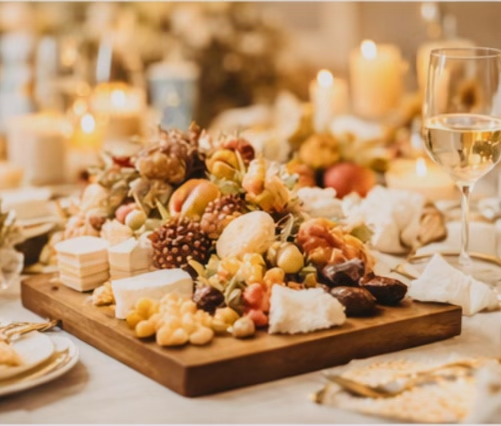
The classic dîner en ville menu is three courses, sometimes more but plan accordingly so you have time to enjoy it with your guests. An apéritif spread — a beautiful board with olives, cornichons, a good terrine, some bread — that guests can graze on upon arrival while you attend to last details. A main dish that is already largely done: a slow-braised something, a perfectly rested roast, a tart that came out of the oven two hours ago and is sitting beautifully at room temperature. And a dessert home made with love or bought, from your favorite pattisserie. A proper tarte tatin from a good bakery will always outperform a homemade chocolate mousse executed in distress.
✦ The French host's secret weapon: the boulangerie and the fromagerie. It can be yours too.
Principle Three: The Table Is Set Before Anything Else
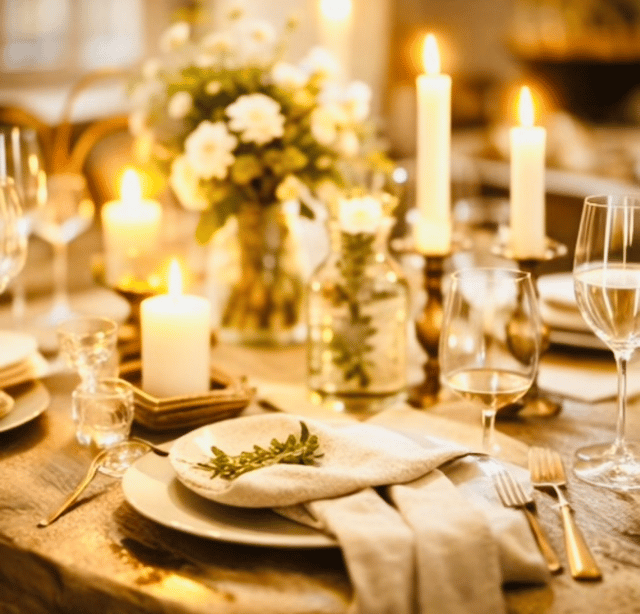
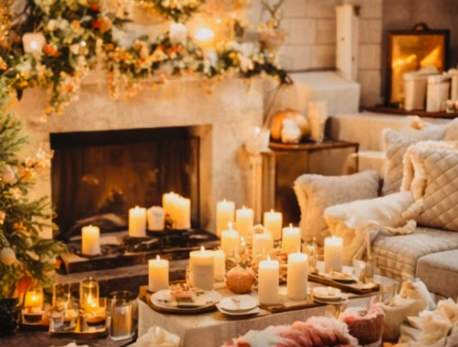
In the Épanvie-inspired household, the table is the first thing done and the last thing fussed with. Set it the morning of the dinner. Set it beautifully: the linen napkins folded with care, the wine glasses polished, the candles placed where they will cast the most flattering light on every face, a simple arrangement of something from the garden or the market at the centre — three floral stems in a simple glass, or a cluster of small candles, or a bowl of fruit arranged with thought.
The table, once set, should not be touched again until guests sit down. Its preparation is done. This is part of your Calmebrium practice: the intentional completion of the physical environment before the emotional environment — the guests — arrives. A set table is a visual signal to your own nervous system: this is ready. The evening can begin.
Principle Four: The Apéritif Is Not a Preamble. It Is the Opening Act.
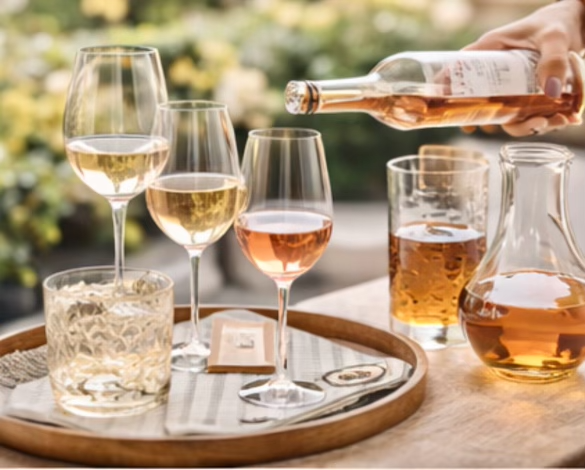
The French apéritif — the drinks and nibbles served before sitting at table — is not a waiting room for dinner. It is where the evening's Atmoswirl is established. Guests arrive, drinks are poured almost immediately, and the beautiful board of small things appears that delight.
This is where your guests begin to relax. Where the first conversations start. Where people who don't know each other discover they are interesting to each other. Here, we allow the apéritif to take as long as it needs — which is usually forty-five minutes to an hour — because they understand that the quality of the dinner conversation depends almost entirely on the quality of the apéritif.
Do not rush people to the table. They will get there. Let the evening find its own pace.
Principle Five: At the Table, You Are a Guest at Your Own Dinner
This is the great instruction of the dîner en ville, and the hardest one for non-French hosts to internalize. Once everyone is seated, your job as host changes entirely. You are no longer the producer. You are the conductor — but a very light-touch conductor, who mostly listens and occasionally introduces a new theme.
You eat. You drink. You ask questions that open up other people. You laugh at things that are funny. You allow the conversation to go where it wants to go, and you only redirect it gently when it has stayed too long on something that is boring everyone, including the person speaking. In Épanvie language: you are FlowCurating the conversation, and being a part of it (not excusing yourself every 7 minutes to check on the roast).
The host who disappears into the kitchen repeatedly to 'check on things' has lost the plot. There is nothing to check on. Everything is already done. Sit down. Enjoy your own dinner. If there's anyone who should not miss out on dinner, it's you. Your guests came not only for the food but to spend time with you.
Principle Six: The Ending Is as Considered as the Beginning
The dîner en ville does not end abruptly. It does not end because it's nine thirty, though of course it may conclude at nine thirty. It ends with the deliberate pleasure of the last glass of wine, the last fragment of cheese, the particular warmth of a conversation that has been running for three hours and has gone somewhere memorable.
The French goodbye — les adieux — is its own ceremony. Coats retrieved unhurriedly. The door held open for a moment of final exchange. The street outside, cold and quiet, which makes the warmth inside feel, in retrospect, even more precious.
After the guests leave, breathe. This is Calmebrium wisdom: sit at the table for ten minutes with the last of your wine, in the warm wreckage of an evening well-hosted. Let it settle. Tonight it is yours. Enjoy the moment.
The Épanvie Dîner en Ville Edit: What Belongs on Your Table
The right objects make the right evening. You asked for it, so here it is, a curated list of essentials to adorn and elevate your dinner. Pricing Guide: Accessible = under $100. Mid-Range = $100–$300. Investment = $300+.
🕯️ The Candles: Because Overhead Flourescent Lighting Is the Enemy of Convivialité
Light the candles. The transformation is immediate. Candlelight makes food look better, wine look more beautiful, and everyone at the table appear more interesting than they did under fluorescent sadness. Good hosts have understood this for years. It is time to catch up.
10-Inch Taper Candles — 12-Pack, European Quality, Smokeless & Dripless
(Accessible)
This candle company has been making candles in Europe since 1870. Their taper candles are what actually appear on European dinner tables — not in movies about European dinner tables, on actual European dinner tables. Smokeless, dripless, 8-hour burn time. In ivory or the Épanvie-approved antique gold, they look like they cost considerably more than they do, which is the highest compliment a candle can receive.
100% Pure Beeswax Handmade Taper Candles — 10 Inch, Honeycomb Design, Pair
(Accessible)
Hand-rolled beeswax with a honeycomb texture that is genuinely beautiful on a dinner table. They emit a subtle natural honey fragrance when lit — nothing overwhelming, just the faintest sweetness that makes the room smell like a summer afternoon in Provence. The warm amber flame of beeswax is softer and more flattering than paraffin. These are the candles guests lean across the table to look at. 'Where did you get these?' is the question. Have a good answer ready.
🍷 The Wine Glasses: Because the Glass Matters More Than You Think
The right wine glass improves wine experience. Not slightly. Dramatically. The shape of the bowl, the thinness of the rim, the weight in the hand — all of these affect how a wine smells, and how you feel holding it. The elegant host does not use mismatched tumblers for a dinner party. They have wine glasses, and the wine glasses are good ones.
Wine Friendly Red Wine Glasses — Set of 4, 23oz, Crystal, Made in Germany, Dishwasher Safe
(Accessible to Mid-Range)
The Wine Friendly collection is their elegant, accessible entry point: crystal clarity, long stems, the perfect bowl size for red wines to open properly. They are made in Germany and dishwasher safe, which is an important detail for the morning after a dinner party where eight people drank with enthusiasm. The recommendation for the table you host regularly.
For the table that deserves the serious upgrade:
Cabernet/Merlot/Malbec Wine Glasses — Set of 2, Hand-Blown Crystal
(Mid-Range)
Hand-blown in Austria, the Veritas line is where serious wine people live. The bowl shape is specifically designed to emphasize the fruit and balance the tannins of Cabernet and its relatives — which is to say, approximately half of everything interesting that will appear on a French dinner table. Extraordinarily thin-walled, which makes you feel more elegant simply holding one. These are pieces that pay dividends over years of excellent dinners.
🧀 The Cheese & Apéritif Board: The Épanvie Opening Act
The French apéritif board is not the Instagram charcuterie tower. It is a considered arrangement of three to five excellent things: one cured meat, two cheeses (one soft, one aged), cornichons, good olives, bread that is actually good bread. It is beautiful without being theatrical. It signals abundance without excess. It is exactly what guests want when they arrive at a dinner party — something to eat immediately while they find their social footing.
Marble & Acacia Wood Cheese Board with 3-Knife Set — Real Marble, Handcrafted
(Accessible)
White marble and warm acacia wood — the exact material pairing that has been making dinner tables look significantly more considered for about three thousand years. The marble surface stays naturally cool, which is ideal for keeping cheese at its best while guests are grazing. The three included knives store in a sliding base tray. It is beautiful enough to place on the table without further arrangement. It serves four to six people's aperitif requirements without drama.
🍽️ The Table Linen: The Single Most Transformative Dinner Party Purchase
If you remember nothing else from this guide: buy good linen napkins. Napkins transform a dinner table from 'dinner at someone's house' to 'dinner at someone's house who takes dinner seriously.' They are reusable, they improve with washing, and they send a signal to every guest that this evening was prepared for rather than assembled.
For a special dinner, use the fancy linen instead of paper napkins. It is a practical expression of the belief that the people at your table deserve the real thing.
100% Pure Linen Dinner Napkins — Set of 4, 20x20 Inch, Machine Washable
(Accessible) ·
Made from 100% European flax linen, and stonewashed for softness before they arrive at your door. They have the particular quality of linen that only linen has: substantial without being stiff, with a natural texture that photographs beautifully and improves with every wash. Available in several colours — our recommendation is natural linen, sage, or a deep dusty blue, depending on your table aesthetic.
100% Pure Cotton Table Runner — 14x72 Inch, Breton Collection, Made in India for European Market
(Accessible)
A table runner rather than a tablecloth — the French preference for showing off a beautiful table surface while adding a layer of warmth and colour. The Breton stripe (the classic navy-and-white that has been doing excellent work in French homes since the nineteenth century) grounds any table arrangement instantly. Machine washable, 100% cotton, made for the European market's standards. Drape it down the centre of your table before you set anything else, and notice how the room suddenly looks like it knows what it is doing.
For the table that has arrived at its final form:
Hermès 'Printed Textiles' Table Runner or Placemat — Silk-Finished Cotton, Seasonal Designs
(Investment) · ⭐ Heirloom standard
The Hermès table linen collection applies the same standard of craftsmanship to the dining table that the carré applies to the neck. A table runner or set of placemats from this collection is not purchased for a dinner party — it is purchased for all the dinner parties, for the next fifteen years, for the table you are building intentionally over a lifetime. In Épanvie terms, this is a Luxury Pillar acquisition: an object that anchors a table and makes every subsequent meal feel considered. It is also, inevitably, something guests reach out and touch when they sit down.
The Épanvie Dîner en Ville Menu: What an Elegant Host Actually Serves
People ask us: what should I cook for a dinner party? The answer is simultaneously simpler and more sophisticated than expected.
They cook things they have cooked before. This is the first rule. A dinner party is not a cooking experiment. A dinner party is a confidence performance, and confidence comes from familiarity. Save the new recipe for a Tuesday night when only you will judge the results.
The Apéritif Board — What Goes On It
One or two excellent charcuterie: jambon de Bayonne, saucisson sec, a good pâté. Two cheeses: one creamy and mild (Brie, a young Comté, a fresh chèvre), one aged and interesting (a mature Comté, a Morbier, a good Roquefort if your guests have adventurous palates). Cornichons — mandatory, non-negotiable, the French would be frankly hurt if you left them out. Good olives. Sliced baguette, still warm if you can manage it. Possibly a small bowl of good radishes with excellent butter and sea salt, which is one of the most elegant things you can put on a table.
That is it. Resist the urge to add seventeen things. Three excellent components are more impressive than twelve mediocre ones, and they take twelve minutes to arrange.
The Main — What Makes It French
Poulet rôti — roast chicken — is the great French dinner party standard, and it is great for several reasons: it is forgiving of timing, it fills the house with a smell that starts working on your guests the moment they walk in, and it is simple enough that you can be present for the apéritif rather than imprisoned in the kitchen. Boeuf bourguignon, made the day before and reheated slowly, is better on day two. A tian of roasted vegetables — tomatoes, courgettes, aubergines, arranged in overlapping rounds in a gratin dish — can go into the oven before guests arrive and emerge an hour later needing nothing.
The principle: choose a main dish that is either made ahead or requires one hour of unattended oven time. Anything that requires active stovetop attention during the dinner is a trap.
The Fromage Course — The Course Most People Skip and Shouldn't
Between the main course and dessert, the French serve cheese. Not as an afterthought. As a course with its own ceremony: the board brought to the table, passed from person to person, eaten with good bread and accompanied by whatever wine remains from the main. This is where the conversation often goes somewhere it didn't plan to go. The pace slows. The evening deepens. The fromage course is worth protecting.
Buy three cheeses. One soft, one semi-hard, one blue or aged. Buy them from a proper cheesemonger or a good grocery cheese counter the day before. Let them come to room temperature for two hours before serving. Do nothing else to them.
The Dessert — Buy It
Get the dessert. Paris is abundant with world class pastry chefs. A tarte aux pommes from a bakery that has been making it for forty years can save you from party prep exhaustion. A good vanilla panna cotta from a trusted source, a dark chocolate tart, a box of macarons from a place that does them properly — all of these are correct answers. Here's the exception - if making desserts is your BlinkGlee moment, where baking cakes, making ganache and cleaning the KitchenAid and pans truly makes you happy, then go for it. Let your baking genius rise.
Dîner en Ville: Your Practical FAQ
Because the most useful guides are honest about the difficult questions.
Q: How far in advance should I invite people?
A: Two weeks minimum, three is better. One week is technically possible but many people plan their weekends and they may not be in town or have other things to do. Send a proper invitation — a personal message with actual details — and confirm the day before. Some would even send a handwritten note.
Q: I get anxious when hosting. Is that normal?
A: Deeply normal, universally experienced by many but can vary. The anxiety of hosting comes almost entirely from performance pressure — the feeling that you are being judged. The shift to convivialité, to genuine pleasure rather than impression, removes most of this pressure immediately. Ask yourself: am I trying to impress these people, or am I trying to make them feel welcomed and at ease? The second is both more achievable and more memorable. Focus entirely on the second.
Q: What if something goes wrong with the food?
A: Something will always go wrong with the food. This is a law. The roast takes twenty minutes longer than expected. The sauce breaks. The starter, which worked perfectly last Tuesday, has decided tonight is not its night. The seasoned host's response: they tell their guests, briefly and with humor, and then they move on. Guests do not come for perfect food. They come for a good evening. A roast chicken that comes out of the oven twenty minutes late, served with a good story about why, is more memorable than a flawless menu executed in total silence.
Q: How much wine should I have?
A: The rough guideline, which can vary of course: one bottle per two guests for the apéritif and dinner combined, plus one extra bottle for the table. For six guests: four bottles. For eight: five. More than this and the evening becomes a different kind of party. Less than this and people will subtly be monitoring the bottles with an anxious eye, which disrupts the Atmoswirl considerably. Big smile! Also: always have something non-alcoholic that is not tap water — a good sparkling water, a prepared pitcher of something with fruit — because someone always wants it and they should not have to ask. There are more non-alcoholic options nowadays and the flavors can be refreshing.
Q: What time should dinner start? And end?
A: Invite guests for 7:30pm. Expect them at 7:45pm. For guests - arriving too early can put your host in the awkward position of not being quite ready. Unless you're there to help, run errands, give the host a break. Serve dinner around 8:30pm, after a genuine apéritif. End when the evening ends — which should not be forced, but will naturally occur sometime between 11pm and 1am depending on the company and the quality of the conversation. If you want to end earlier (you have an early polo match, a plane to catch or any other reason to wake up early), make sure you let your guests know ahead of time to avoid the awkward moment of asking everyone to leave halfway through the cheese course.
Q: Should I ask about dietary restrictions?
A: Yes — once, when you invite them, and then never again. 'Do you have any dietary restrictions I should know about?' is sufficient. If someone is vegetarian, build a main around that quietly without comment. If someone has allergies, take them seriously. What the gracious host does not do is make the dietary restriction the topic of conversation, which turns the person into a guest who is defined by what they cannot eat. They simply accommodate it and move on. The guest feels welcomed rather than accommodated, which is a crucial distinction.
Q: Is it rude to ask guests to bring something?
A: No, and many guests regularly do it. What is important is what you ask them to bring. Wine: usually appropriate. Flowers: a potential complication if you have already arranged your table. A specific cheese or a bottle of something specific: perfect — it gives them a task they can feel good about completing. There is a difference between a potluck and a hosted dinner. You make the choice.
Deepen Your Épanvie Entertaining Practice
The dîner en ville is richest when it connects to the broader Épanvie world of intentional living. These insights live alongside it:
Related Épanvie Articles You'll Love:
Parisian Minimalist Makeup: The 5-Minute French Girl Beauty Look
50 Ultimate European Inspired Apartment Essentials: La Joie De Vivre
15 Parisian-Inspired Valentine's Gifts Under $50 She'll Actually Love
European Home Organization Ideas: 25+ Elegant Storage Solutions for Every Room (2026 Guide)
The Magnificent Seven - Transform your Travel
The JOURNAL - Daily practices for intentional wellness
Morning Rituals That Elevate
And more fun guides!
· Le Weekend — The protected time that makes Saturday dinners possible. [→ epanvie.com/guides]
· Natural Wine for Beginners — What to serve, how to choose, and why natural wine is the Épanvie table's best companion. [→ epanvie.com/guides]
· Mise en Place — Life organisation as elegance: the preparation philosophy that makes dîner en ville possible. [→ epanvie.com/guides]
· Calmebrium Routines — The mindful preparation rituals that set the Atmoswirl before guests arrive. [→ epanvie.com/calmebrium-routines]
· Flâner — Find your cheesemonger, your boulangerie, your market on a Saturday morning wander. [→ epanvie.com/guides]
Join the Atelier Épanvie Circle: Because Some Tables Need a Good Community
"DÎNER EN VILLE is the joy of dining, not to eat and run." — Épanvie
You read a guide about a French-inspired dinner party philosophy to the end. This tells us precisely what kind of person you are: someone who believes that how we gather matters. That the quality of a Saturday evening is worth thinking about. That a table set with care, a wine poured without rushing, a conversation allowed to go somewhere unexpected — these are not small things. They are, in fact, the things.
The Atelier Épanvie Circle is for you. Our private membership for those building a life of genuine, intentional elegance — not the performed kind, the felt kind.
· Monthly exclusive Épanvie Lifestyle Guides — richer and more personal than anything public
· Seasonal guides - from entertaining, gifting, table styling, menu curation
· FlowCuration practices and Calmebrium ritual inspiration
· Early access to Épanvie curations before they reach the public
· The free Épanvie Morning Guide upon joining
→ Join the Atelier Épanvie Circle at epanvie.com/join-and-subscribe
Content is for informational and lifestyle purposes only. Full Privacy Policy at epanvie.com. © 2026 Épanvie. All rights reserved.

Connect
Join our circle for thoughtful Parisian moments.
your community
epanvie@gmail.com
contact@epanvie.com
© 2025. All rights reserved.
PRIVACY AND LEGAL DISCLAIMER.
Content is for informational and entertainment purposes only. Not medical, veterinary, legal, financial, or professional advice. Laws and regulations vary by country. Some content may be fictional. Product is for general information only. Results not guaranteed. We may earn commissions from affiliate links. Full Privacy Policy and Disclaimer for details. Last Updated: [January 19, 2026] Effective Date: [January 10, 2026]
© [2026] Epanvie. All rights reserved.
My post content